

Grackles are becoming increasingly more of an issue in Florida's marinas and shipyards. Far from just being a nuisance, not addressing grackle infestations can lead to serious problems for boat owners, staff, and visitors.

Grackles are omnivorous and will readily seek meals from a plethora of sources. A large component of their diet consists of arthropods, including aquatic species like farmed and wild-caught shellfish that are brought to docks. Grackles will also naturally pick small fish from the surface or shores of water bodies for their meals. The opportunity to more easily obtain food from human-occupied marinas creates incentive for these birds to dwell closer, creating a vast array of health, safety, and profit concerns.
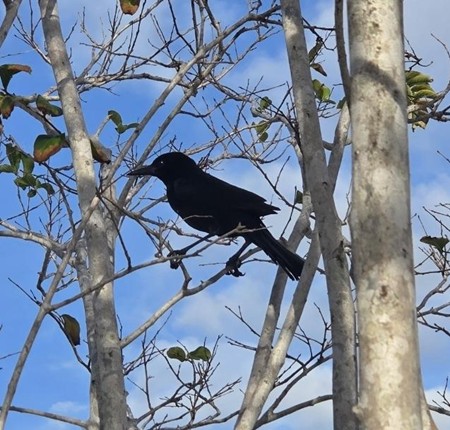 The most prominent grackle species in Florida is the boat-tailed grackle, Quiscalus major, which is known to be complexly social and at times aggressive in its pursuit of food and territory. As a primarily coastal species, these grackles are especially drawn to these locations of easily obtained seafood. They form large groups of individuals, and, if a human or animal happens to wander too close to the nesting females, they may be targeted by the local protective male.
Well-known visual and acoustic methods of bird deterrence leave much to be desired when a population of grackles has set up shop near what they consider a prolific food source. The system used by Hawkeye Bird and Animal Control is both integrated and humane, playing into the natural instincts of grackles as songbirds to mitigate their damage output and redirect them from human areas. The combination of lasers, pyrotechnics, and falconry techniques is a multisensory system that is effective in grackle control.
Why Are Grackles Drawn to Marinas?
Florida, naturally, is home to many piscivore species (i.e., animals that eat fish). Grackles may not be the only kind of bird you find roaming the docks in search of bycatch or undesirable fish; herons, egrets, cormorants, and anhingas are perhaps more commonly associated with the gulf and Atlantic fisheries. However, these birds are not known for the same antagonism that has made the boat-tailed grackle notorious. Additionally, they do not come in the same droves that can include over one hundred birds.
As previously stated, grackles are known for their wide dietary profile. Though foraging is not necessarily a tall order when there are so many foods to choose from, there will always be ebbs and flows in food availability. In such cases where there is less food available, animals may resort to methods of getting their meals that are less energetically taxing so that they are still able to reap the benefits of whatever they find. This trend is what leads to the grackle’s less-than-desirable relationship with humans—these birds realize they could get a lot more food without doing any of the work by simply taking what has been procured by someone else. In this case, it means plucking flopping fish or crabs from a captain’s bow…or perhaps the French fries from a patron of a restaurant.
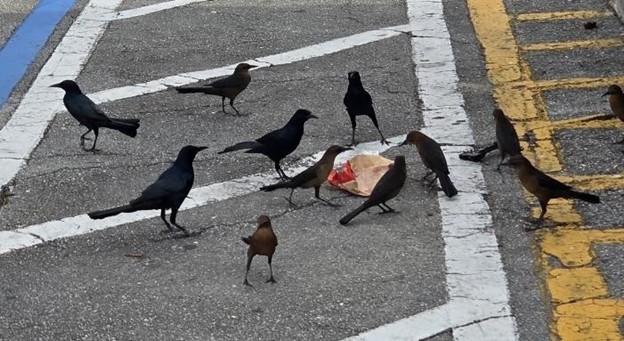
Regardless of the food they consider worth the crime, boat-tailed grackles will build their nests nearby to keep the convenience close. Though these birds are known to nest in tall grasses, shrubs, and reeds, they are certainly not picky, so they will settle in boat canopies and other human structures. This habit is compounded by their eventual realization that many predators will avoid places of heavy foot traffic. Instead of forming pairs, a single male will take on the role of defending a group of nesting females from “competitors,” be they other males or the newest boat owners at the marina.
Generally, grackle activity will boom in the late summer as individuals choose their warmer southern nesting sites. The birds will continue to cause issues as they nest, especially as males begin to retrieve food for the stationary brooding females. When the nestlings hatch in the spring, both parents will bring them food until they fledge…and a plague of new grackles enters the arena.
Impact of Grackle Infestations
The ramifications of bird infestation make the moniker “a plague of grackles” much more understandable. Some birds can poop up to 48 times in one day, and grackles are no exception. Birds with nestlings will even carry their poop away from the nest! Beyond the aesthetics, this constant flow of waste is detrimental in many ways to us humans.
Bird poop is actually a combination of waste from both the kidneys and the digestive tract; the two forms of waste are mixed after their individual production and expelled from the body at the same time. The white portion known for substantial staining is the urinary waste. While humans and most mammals will expel kidney waste in the form of urea, birds do so in the form of uric acid, which allows them to decrease waste toxicity at the cost of more energy.
Your level of worry should spike at the sight of the word “acid.” This corrosive chemical eats away at paint, wood, and metal alike, causing degradation and rusting. Cleaning is either immediate and laborious, or delayed and expensive (and, honestly, still laborious). Everything is at risk: canvas coverings, wiring, fiberglass coating, aluminum—even complex machinery, like motor and radar systems. The last thing anyone wants is for the boat-lift cable to slip mid-use.
Though they’re perhaps not a bona fide plague-spreader, there are still human health considerations when boat-tailed grackles are present. There have been recorded cases of avian influenza in grackle species, a virus that is spread not only through fecal matter but also other fluids and even feather proteins. It is important to note that, though the risk remains low to humans, having many birds congregating would increase disease flow among songbirds and contribute to decreasing population trends.
There is no returning from the metaphorical stain on a shipyard’s reputation that is left by the actual stains of copious bird poop. Incidental damage, odors, and the occasional slip-and-fall accident can tank public perception and the future sales of the marina.
All of these negative effects underline the need for using professional grackle removal services.
Common Grackle Deterrents That Don’t Work for Marinas
Mainstream bird deterrents used in abatement generally fall into the categories of sight or sound. There are plenty of things people have tried that will only work for short amounts of time, if at all, when implemented in cases such as marina-inclined grackles. Grackles are incredibly intelligent, quickly finding ways to overcome human intervention, notwithstanding the environmental considerations.
Visual deterrents are installed in the hopes that birds will be scared enough to avoid areas where they have been put. You’ve likely seen the fake owls lining the shelves of the garden section at your local hardware store or perhaps “perched” at the corner of someone’s roof. Wind kites shaped like birds of prey are also available, fluttering in the wind in a false flight. These, like scare-eye balloons and flash tape, are meant to convince nuisance birds that a dangerous predator is in the area.
Acoustic deterrents follow the same basic principle but use sound instead of visuals to induce fear. Some noisemakers play back the sounds of predators, whereas others replicate songbird alarm calls. Ultrasonic devices play irritating noise outside the range of human hearing. Cannons and “bangers” have an increased range and can be combined with the aforementioned techniques to make a large area less attractive.
These are not foolproof methods. Visual deterrents only work in small surrounding areas, as grackles will simply choose another part of the marina to terrorize. This is also true of typical noisemakers; cannons do theoretically overcome this problem, but sound dissipates over distance and is affected by water conditions. Certain areas also have noise regulation laws.
All equipment is also at risk of expedited degradation due to the increased salinity of the air in marine environments. Breakdown of plastics, including paints and coatings, introduces microplastic pollution to the water and nearby soils.
The biggest drawback to using a single style of bird abatement is that grackles quickly understand that, though they are scared, they are not being chased. The “owl” is not blinking, nor are its feathers fluttering in the wind. There is no crow standing where that call is coming from. Any recognition of a lack of any real danger will set bird removal back or halt it altogether.
Hawkeye’s Proven Method for Grackle Control in Marinas and Shipyards
So, what is the best, most effective way to deter grackles from boats and waterfront areas?
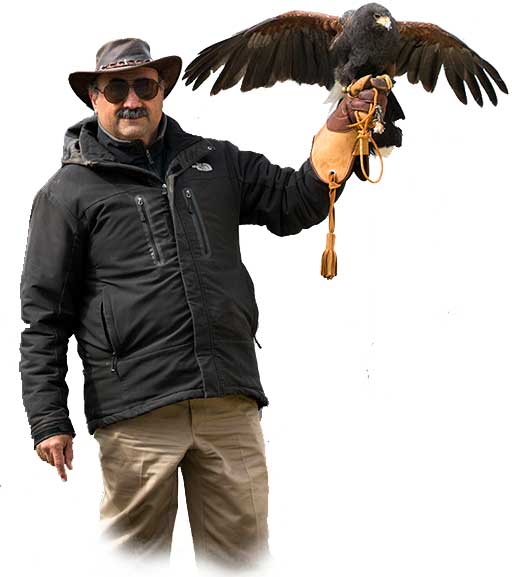
Hawkeye’s signature approach to nuisance bird control employs raptors trained in the art of falconry. Though the selection of the species and even individual profile of the bird for your property depends on the matter at hand, the goal of falconry abatement remains constant: finding the advantages offered by natural interspecies interactions.
The trained raptor will follow the licensed falconer’s direction. Commands given through body language and whistle cues motivate the bird to follow closely and keep their trainer at a comfortable distance, allowing the falconer to explore the property with their partner in tow. Even though this humane method does not typically result in the death of any wild birds, moving the raptor towards said wild birds will still evoke their prey response and cause them to flee. The raptor is constantly observed both on the job and at home for optimal health and behavior.
However, the natural inclinations of the falconry bird can pose problems in certain weather conditions or crowded air spaces. Additionally, the implementation of falconry requires a recurring cost to truly be effective, as the wild birds must associate the raptor as a permanent predator. This is where two other methods of bird control come into play.
Lasers are an effective visual agitator for grackles, especially when continuously pointed where they attempt to land. This also gives the sensation of predator-prey chase, especially in low-light. However, due to the sensitive nature of nautical sensors and human eyes, this strategy must be entrusted to a trained operator only.
Loud acoustics like screamers function better as an abatement strategy when used in conjunction with visual harassment, because the final effect is more “predator-esque,” quickly dispersing large flocks of roosted birds. Noise ordinances and associated permits are the largest problems with acoustic implementation.
A post-abatement option to consider is the installation of netting once roosting birds are no longer actively nesting. This, with maintenance and observation, can prevent future grackle plagues from settling in.
Hawkeye’s Integrated Grackle Management Approach
Hawkeye uses the above methods strategically in customized plans based on observations made at your facility. The size of the property, risk factors for each deterrent, and overall goals are all considered to create a schedule and timeline for bird removal.
First, we disperse flocks and roosts with targeted abatement. Accompanied by their handler, a trained raptor patrols the area, causing grackles to congregate in numbers for safety before fleeing at the sight of the incoming predator. We target high-rise architecture with lasers and pyrotechnic acoustics. Even seagrape plants can be monitored and made unattractive simply by grabbing a branch and giving it a good shake! This is best done before any nests are constructed, so males do not attract their harems to the area.
Once the grackles are no longer an egregious problem, the area is cleaned. With permittance, the beginnings of any nests are cleared from the area. Feces and urates are no match for some elbow grease. Permanent barriers like netting and spikes can be installed at the behest of the property owner. If opting for this, understand that this kind of barrier will need to be maintained and monitored by the installer. It is also essential to have the occasional check-in by your raptor, laser, or pyro specialist to ensure long-term effectiveness. If you catch wind of any grackle activity post-job, remind them who’s in charge before they think it’s them!
With Hawkeye, all work is done by trained professionals with the licensing required for legal falconry and abatement procedures. Attempts by the uninformed to get rid of these nuisance birds are no match for the complexities of grackles’ natural behavior.
Advantages of Professional Grackle Control at Marinas
The key to any nuisance animal management plan is consistency, just as is true for any domestic animal training or conditioning. Constant input from multiple directions will remove incentive for grackles to colonize the area. Hawkeye’s methods are humane and environmentally friendly, and the effective removal will reduce the amount of cleaning and maintenance needed by the property owner to make up for the damage done by grackles. Plus, fewer birds means fewer health risks for people using the marina and surrounding facilities.
FAQs: Grackle Control for Marinas and Shipyards
Q: Are laser deterrents safe to use around boats and water?
A: In most cases, yes! Because a professional operator would be trained and familiar with the particular area, the operation would be safe and avoid sensors that may be damaged. An expert will also be aware of the risks posed by using lasers around aircraft, especially knowing that laser use is generally most effective with a solid backdrop, anyway, like a building or tree. We do not recommend DIY laser use.
Q: Are boat-tailed grackles (the coastal species) protected by law in Florida?
A: Because they are an endemic species, yes. However, the drawbacks of grackle colonization in urban areas have led to the circumstantial legalization of grackle “take” (i.e., disturbing/harassing, trapping, hunting, catching, shooting, killing, etc.) under standing depredation order. A professional bird or animal control company will obtain proper permitting before starting any job to allow for the legal removal of grackles, implementation of falconry abatement, and usage of noise and laser methods.
Q: Will using distress calls or recordings scare grackles away from my marina?
A: Not for long. Over time, grackles recognize that the distress calls they hear are not accompanied by actual distressed birds or predators that would warrant the sound.
Q: How does the initial cleanup process handle the biohazard risk from guano?
A: Removal of grackle feces eliminates the main sink of pathogens like avian flu, trichomonas spp., and coccidia. Additionally, getting rid of nests ensures that no chicks will be present, so no adult birds will be transporting their fecal sacs away from the nest into human foot traffic. Urates are, theoretically, not the main disease carrier—they simply accompany the feces and cause staining.
Q: How often are pyrotechnic deterrents used?
A: In most cases, 5-20 shots are necessary per visit. For large areas, daily visits are needed.
Q: Do I need a special permit to use a laser device for bird control on my property?
A: Generally speaking, you do not need a permit for laser deployment on your own property. This changes when you are located near aviation or national security installations. To be safe, check and confirm with your municipality.
Seeking marina pest bird management or shipyard bird control?
Hawkeye Bird and Animal Control services multiple areas of the State of Florida, including Tampa, Clearwater, Fort Myers, Naples, Miami, Fort Lauderdale, Jacksonville, and Orlando. Contact Hawkeye today for a customized grackle control plan for your marina or shipyard!