
Florida’s aviation environment is one of the busiest and most complex in North America. Florida airports spanning international hubs like Miami International Airport and Orlando International Airport to high-traffic executive facilities such as Palm Beach International Airport and Fort Lauderdale-Hollywood International Airport operate in a unique climate that supports year-round bird activity. About 50 million migratory birds flock to the state for the winter, with many more passing through on their way south. Among the most persistent and underestimated threats in these environments is the feral pigeon.
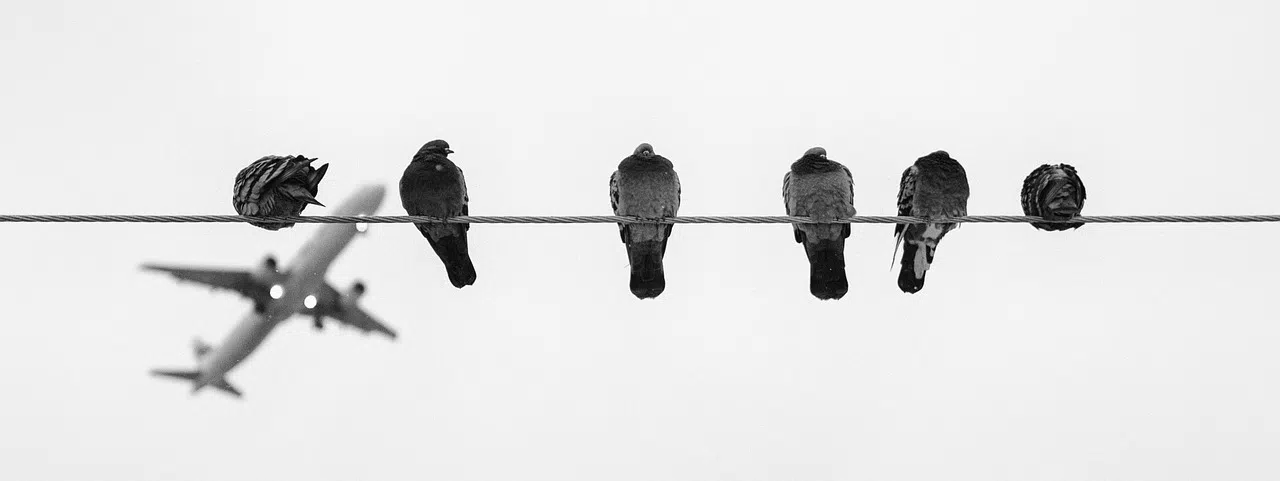
For aviation facility managers, fixed base operators (FBO) at airports, and airport authorities, professional pigeon control for airports is not simply a property maintenance issue—it is a critical aviation safety requirement.
Florida Aviation Environments: Why They Attract Pigeons
Florida’s climate creates the ideal pigeon habitat:
- Warm temperatures year-round
- Abundant food sources from urban surroundings
- Large structural roosting areas (hangars, terminals, jet bridges, parking garages)
- Minimal seasonal die-off compared to northern states
Airports and aviation facilities provide elevated ledges, beams, and protected cavities that mimic the cliff environments pigeons naturally prefer. This unique environment makes long-term pigeon control in Florida aviation facilities especially important for maintaining safe operations.
In Florida, where migration is less of a limiting factor, pigeon populations remain stable and often grow continuously if not professionally managed. Without professional pigeon control, populations can grow rapidly and become difficult for airport staff to manage.
Unlike migratory bird species, pigeons are non-migratory and highly site-faithful. Once established at an aviation facility, they will continue to roost, breed, and return daily—creating a long-term risk.
While they are part of the same family (Columbidae), the term "pigeons" typically refers to the larger, stockier species, while "doves" are smaller and more slender.
Common pigeon species found in Florida:
- Rock Pigeon (Feral Pigeon): This is the most common pigeon in Florida, often seen in urban areas, on windowsills or ledges, and gathering in city parks. They are also referred to as city pigeons. Rock pigeons are an introduced species, brought over from Europe initially as a food source and quickly becoming feral. These pigeons boast highly variable colors, ranging from classic blue-gray with black wing bars to all-white, "wedding release" varieties.
- White-Crowned Pigeon: This native, threatened species is found primarily in extreme South Florida and the Florida Keys. It is easily identified by its dark slate-gray body and a brilliant white "cap" on its head. The white-crowned pigeon is unique for nesting on remote mangrove islands and flying to the mainland to feed on tropical fruits, like poisonwood and figs.
Why Pigeons Pose a Serious Aviation Risk
While pigeons may seem smaller and less dramatic than large flocking birds, they still pose several aviation-specific hazards:
Bird Strike Risk
Pigeons frequently loaf on runways, taxiways, and terminal rooftops. When startled by aircraft movement, they flush unpredictably into active airspace. Even smaller birds can cause:
- Engine ingestion damage
- Windshield impact
- Airframe dents
- Distraction during takeoff and landing
At high speeds, even a single pigeon strike can result in costly downtime and inspection delays.
Hangar and Facility Contamination
Inside hangars and maintenance facilities, pigeons create:
- Corrosive droppings on aircraft surfaces
- Nesting material inside structural cavities
- Foreign object debris hazards
- Contamination of maintenance zones
Bird droppings are acidic and accelerate corrosion on aluminum and painted aircraft surfaces. In Florida’s humid, salt-influenced coastal air, corrosion risk is already elevated—pigeon activity compounds that threat.
Health and Regulatory Concerns
Pigeon infestations can introduce:
- Air quality contamination
- Histoplasmosis and psittacosis risk
- Slip hazards on walkways
- Structural degradation
Aviation facilities are held to strict operational and safety standards. Persistent pigeon roosting undermines compliance and creates reputational risk.
Why General Bird Abatement Is Not Enough for Pigeons
Effective aviation facility pigeon control requires techniques designed specifically for hangars, terminals, and other aviation structures.
Many airports implement general wildlife hazard management plans that focus on:
- Raptors and migratory birds
- Waterfowl
- Flocking blackbirds
However, pigeon removal in Florida aviation facilities requires a different strategy.
Pigeons Behave Differently Than Migratory Birds
Unlike transient species, pigeons:
- Breed year-round in Florida
- Nest inside structures
- Exhibit strong homing behavior (if scared off, they’ll always return “home”)
- Rapidly repopulate treated areas
Traditional bird dispersal techniques (noise cannons, occasional harassment, pyrotechnics) may temporarily scatter pigeons but will not eliminate structural nesting populations.
Why Specialized Pigeon Control Is Required
Effective pigeon control at Florida airports requires a multi-layered, aviation-specific approach:
1. Structural Exclusion
- Heavy-duty bird netting in hangars, maintenance bays, roof canopies and jet bridge undersides.
- Ledge modification
- Entry-point sealing
- Anti-roost systems and pigeon deterrents for airport terminals that are engineered for aviation infrastructure
- Shock Track, systems, bird spikes, and other aviation approved pigeon deterrents designed for airport infrastructure
This prevents nesting and long-term establishment.
2. Targeted Trapping Programs
Where populations are already established, humane live trapping programs reduce breeding stock and break site loyalty cycles. This is especially important for large hangars, maintenance facilities and any outside buildings where pigeons may nest, especially near the flight lines.
3. Falconry-Based Reinforcement
In aviation environments, properly managed falconry programs can create real predator pressure. Raptors alter pigeon behavior in ways that sound deterrents cannot. For a pigeon, “home” becomes a dangerous place to be. In Florida’s open-air airport landscapes, falconry can be a powerful complement to structural exclusion and trapping.
4. Ongoing Monitoring and Compliance
Florida airports operate under FAA wildlife hazard mitigation expectations. Pigeon control must integrate with:
- Wildlife hazard assessments
- Safety management systems (SMS)
- Environmental compliance considerations
This requires a specialist who understands both pigeon biology and aviation risk. These strategies often form part of broader airport wildlife management services designed to reduce bird-strike risks.
The Unique Challenge of Florida’s Coastal Airports
Airports in South Florida and along the Gulf Coast face additional complexity:
- Salt air accelerates corrosion from droppings.
- Hurricane-resistant construction creates sheltered ledges.
- Urban density increases food availability.
- Year-round breeding accelerates population growth.
Facilities in areas like West Palm Beach, Fort Lauderdale, Miami, and Tampa must treat pigeon removal as an ongoing aviation safety program—not a one-time cleanup.
Why Professional Pigeon Removal Protects Aircraft, Infrastructure, and Liability
Many aviation operators rely on specialized bird control services for airports to manage persistent species like pigeons that thrive in structural environments.
Aviation pigeon control is not just about removing birds—it is about:
- Reducing bird strike exposure
- Protecting aircraft assets
- Maintaining regulatory compliance
- Preventing corrosion and structural damage
- Protecting passenger perception
Long-term pigeon abatement programs help airports maintain safer flight operations and cleaner aviation facilities. Improper or incomplete removal can actually worsen infestations by dispersing birds into adjacent structures within the same facility.
Choosing an Aviation-Specialized Pigeon Control Provider in Florida
Specialized airport pigeon removal services ensure that bird management strategies align with aviation safety regulations and operational requirements.
When selecting a pigeon removal service for Florida airports and aviation facilities, choose Hawkeye Bird and Animal Control.
Hawkeye:
- Understands aviation safety protocols
- Coordinates with airport operations
- Uses exclusion-based solutions
- Avoids ineffective short-term dispersal-only tactics
- Can integrate falconry where appropriate
- Is compliant with FAA protocols
Pigeon removal in Florida airports is a specialized discipline that requires knowledge of avian behavior, aviation infrastructure, and regulatory sensitivity.
Florida’s aviation industry is critical to tourism, commerce, and global connectivity. Pigeons may appear small, but their impact on aircraft safety, maintenance integrity, and airport operations is significant.
Specialized pigeon control—not general bird abatement—is the only long-term solution for aviation facilities in Florida’s demanding environment.
For airport authorities, FBO operators, and aviation property managers, proactive pigeon removal is an investment in safety, compliance, and operational reliability. Airport managers looking to get rid of pigeons safely and effectively should work with experienced bird aviation control specialists.
Contact Hawkeye Bird & Animal Control
Hawkeye is your go-to company for bird abatement and pigeon trapping. We have over 3 decades of experience in falconry bird control and pigeon trapping. Hawkeye is part of the Bird Strike Committee in North America and is very familiar with civilian airports. We also have knowledge of the BASH program. Contact us today!